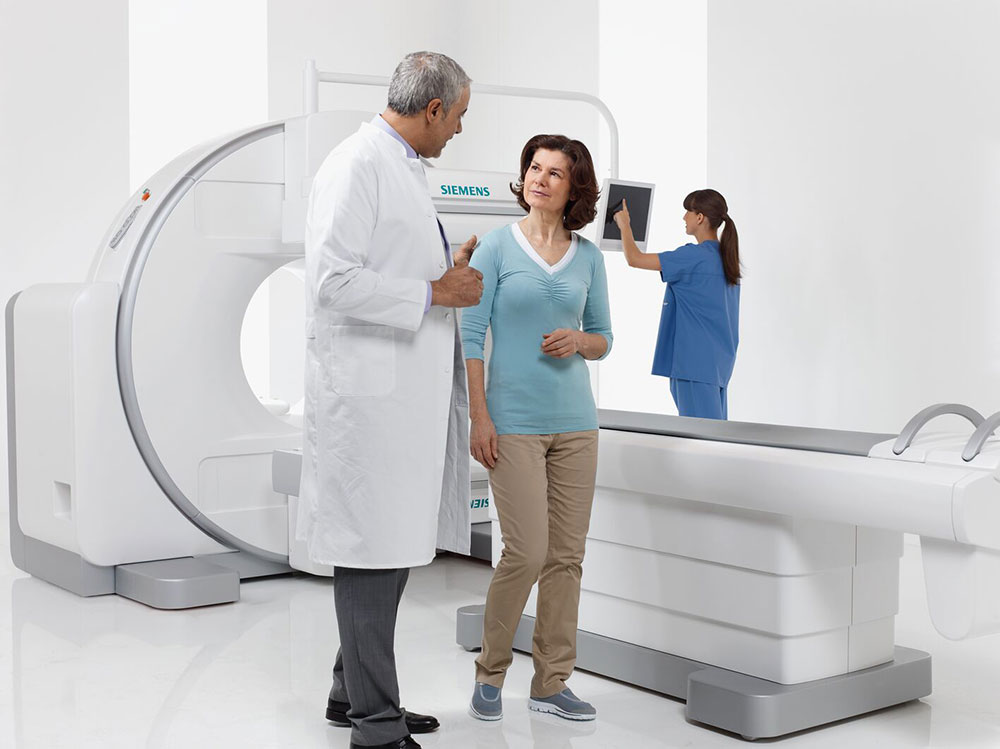
Exploring the World of Nuclear Medicine Imaging
In the evolving landscape of medical diagnostics, nuclear medicine imaging stands out as a crucial and sophisticated tool. By leveraging radioactive substances to visualize and diagnose diseases, this technology provides insights that are pivotal for the accurate assessment of various medical conditions. It serves as a bridge to understanding complex bodily functions and uncovering diseases at their most treatable stages.
Understanding Nuclear Medicine Imaging
Nuclear medicine imaging is a specialized area of radiology that uses small amounts of radioactive materials, known as radiotracers, to diagnose and treat diseases. These radiotracers are typically injected into the bloodstream, inhaled, or swallowed, and they accumulate in the target organ or area of interest. As they decay, they emit gamma rays which are detected by special types of cameras and a computer to create images of the inside of the body.
Key Applications
- Identifying abnormalities early in the progression of a disease.
- Evaluating the function of organs such as the heart, brain, and lungs.
- Detecting and monitoring cancer stages and response to therapy.
- Assessing bone fractures and infections.
- Diagnosing and managing thyroid disorders.
For more comprehensive details on how nuclear medicine imaging can benefit patient diagnostics, one can explore the services offered by a nuclear medicine clinic.
Technological Advancements in Nuclear Medicine
Advances in technology have significantly enhanced the precision and safety of nuclear medicine imaging. Innovations such as hybrid imaging combine nuclear medicine with other modalities like CT or MRI for more comprehensive diagnostic capabilities. This evolution reflects a move towards more advanced diagnostic imaging techniques that provide better patient outcomes.
Hybrid Imaging Technologies
- PET/CT and SPECT/CT: Combine functional and anatomical imaging to provide high-resolution images.
- PET/MRI: Merges metabolic information from PET with the high soft tissue contrast of MRI.
These technologies enable a more detailed and accurate assessment, leading to improved clinical decisions and patient care. As such, they are integral to the nuclear medicine imaging landscape.
The Role of Nuclear Medicine in Modern Healthcare
The role of nuclear medicine in healthcare is expanding, as it provides crucial insights into the functioning of the body at the molecular level. Its applications are diverse, from oncology to cardiology and neurology, making it indispensable in modern medical diagnostics.
Benefits to Patients
- Non-invasive procedures with minimal discomfort.
- Early detection of diseases allows for timely intervention.
- Personalized treatment plans based on accurate diagnosis.
By offering detailed insights into physiological processes, nuclear medicine scans are integral to personalized medicine, ensuring treatments are tailored to the individual needs of patients.
Future Prospects and Conclusion
As nuclear medicine continues to evolve, its integration with other radiology imaging services promises to push the boundaries of what is possible in disease diagnosis and management. With continuous research and development, the future of radiological imaging services is set to become even more promising, offering hope for improved healthcare outcomes worldwide.
Those interested in learning more about medical imaging services and how they are shaping the future of healthcare can explore further resources provided by industry experts.
About the Author